Hire a Fractional CTO: What It Costs, What You Get, and When It Makes Sense
What a fractional CTO actually costs, what you get for the money, and the four situations where fractional leadership beats a full-time hire.
The question "should I hire a CTO?" comes up in a specific way in print, embroidery, and decoration businesses. Not because the business needs a technology visionary — but because the systems are getting complicated, the vendors are circling, and nobody in the building has the time or the expertise to make informed decisions about what to do next.
What a Fractional CTO Actually Does
A fractional CTO is a senior technology and operations leader who works with your business on a part-time basis, with the level of involvement agreed in advance. You get the thinking, the experience, and the accountability of a senior hire without the full-time salary, benefits, or recruitment risk.
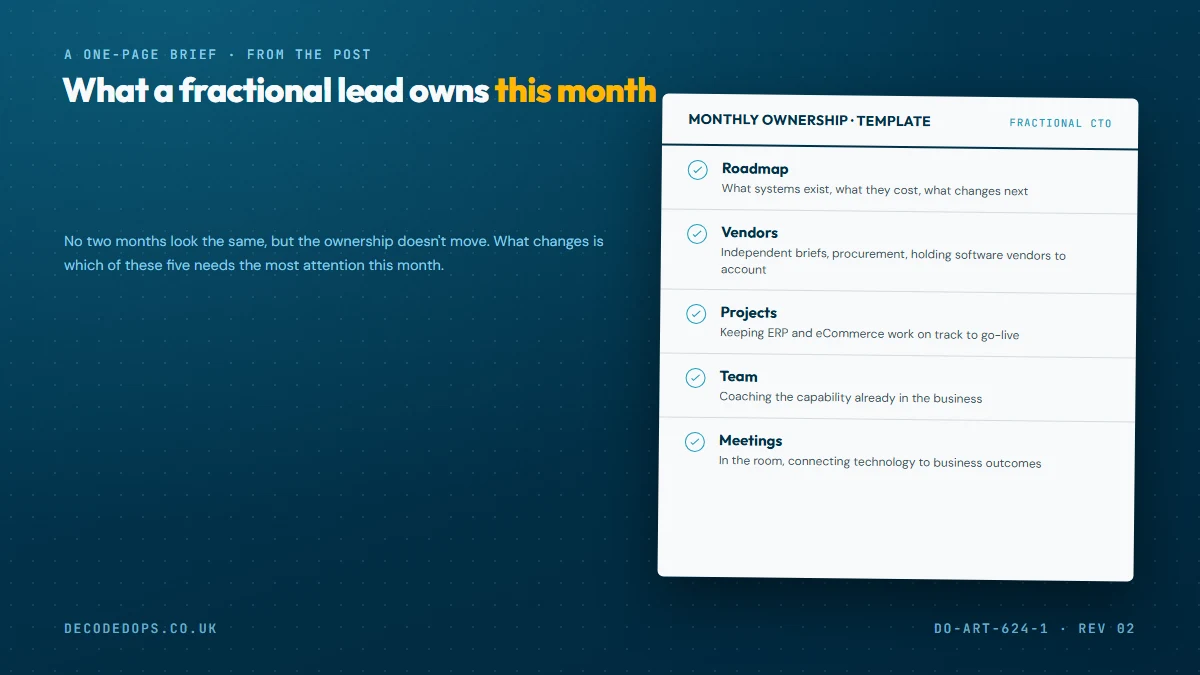
In the print and decoration sector, the fractional CTO role typically covers:
- Technology roadmap ownership — knowing what systems you have, what they cost, and what needs to change next
- Vendor management — holding software vendors to account, writing independent briefs, managing procurement
- Project oversight — making sure ERP implementations, eCommerce integrations, and systems projects stay on track
- Team coaching — building the capability of your existing team rather than replacing them
- Operational leadership — attending management meetings, owning cross-functional decisions, being the person who connects technology to business outcomes
What It Costs
A full-time Head of Operations or IT Manager in this sector costs £50,000–£80,000 per year plus employer costs. A fractional CTO costs a fraction of that, set by the scope of the work and how involved you need them to be.
My Retained service is priced to the scope of your business rather than your turnover, with a 12-month minimum, and the level that fits is agreed at the audit. The time goes wherever it is needed across meetings, project work, vendor oversight and team support. After the minimum period, either side can give 30 days' notice.
When Fractional Makes Sense
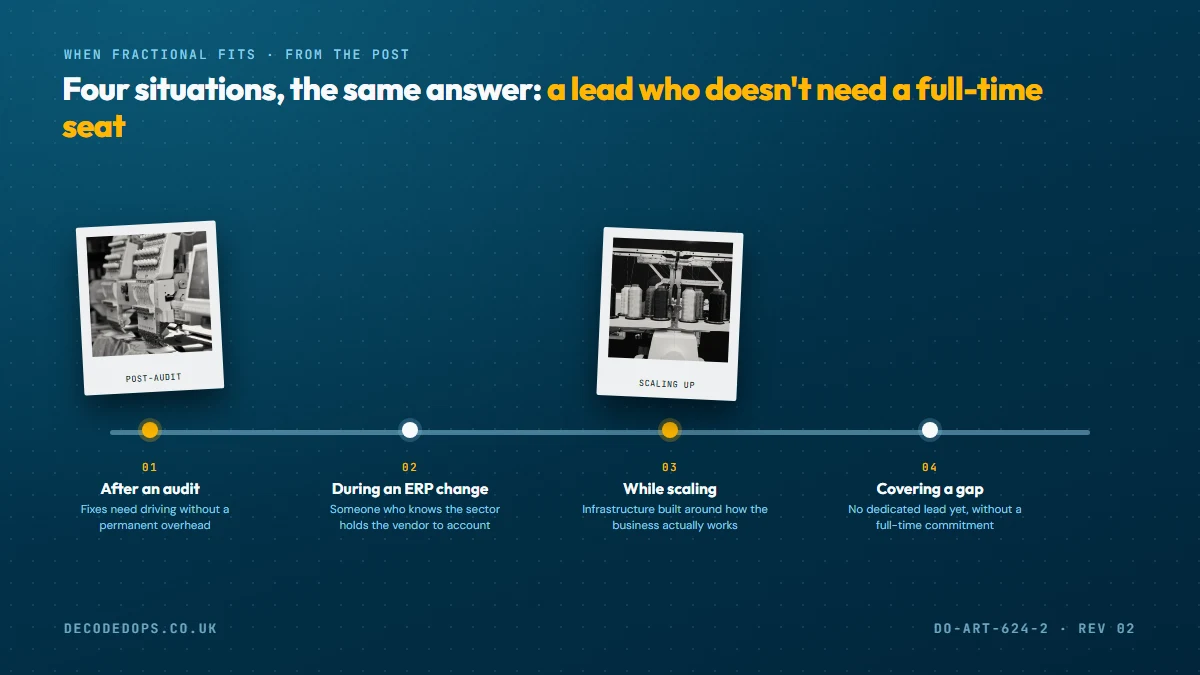
There are four situations where a fractional CTO is the right answer for a growing business:
- Post-audit implementation — the Clarity Audit found issues. Now someone needs to drive the fixes without becoming a permanent overhead.
- ERP or technology transition — you're implementing new software and need someone who knows the sector and the vendors to hold everyone accountable.
- Scaling without chaos — revenue is growing but the systems aren't keeping up. You need operational infrastructure built around how your business works.
- Covering a gap — your ops director left, or you've never had a dedicated technology lead. Fractional covers the gap without the commitment of a full-time hire.
When It's Not the Right Answer
If your business needs someone on-site every day managing a team of IT staff, a fractional arrangement won't work. If the technology challenge is confined to a single, well-defined project, a fixed-scope Deliver engagement is probably more appropriate than a retained role.
The first step is always the same: a conversation about what's happening, what's not working, and what level of involvement would actually move the needle. That conversation is free, takes 60 minutes, and comes with no obligation.
How to Evaluate a Fractional CTO
Not all fractional arrangements deliver the same value. The difference between a good engagement and a disappointing one usually comes down to three factors: sector experience, scope clarity, and availability.
Sector experience matters more than general CTO credentials. A fractional CTO who has worked in distribution or professional services will struggle to understand why embroidery production scheduling looks different from screen print, or why your blank stock turns over differently from your finished goods. The questions they ask in the first month tell you whether they have done this before in a business like yours.
Scope clarity is essential. The most common reason fractional engagements fail is vague scope. “Technology leadership” or “operations oversight” means different things to different people. A good engagement starts with a written scope that defines which decisions the fractional CTO owns, which projects they lead, and how progress is measured month to month. If the scope is not written down, it will drift — and the value will dilute.
Availability shapes the outcome. Light-touch oversight suits strategic direction. Active project delivery needs a lot more of their time, and too little involvement rarely changes anything. Be honest about the level of involvement your situation actually needs, not the level that feels affordable.
Fractional leadership works when the expectation is realistic, the scope is clear, and the person has walked the same floor you are walking. A 60-minute conversation — no pitch, no obligation — will tell you whether it is the right fit for your business.
Plain English. No jargon. No vendor agenda.
A Clarity Audit maps your operations, finds the changes that will make the biggest difference, and gives you a plan you can act on. No reports you'll never read. No recommendations you can't implement.
See Clarity