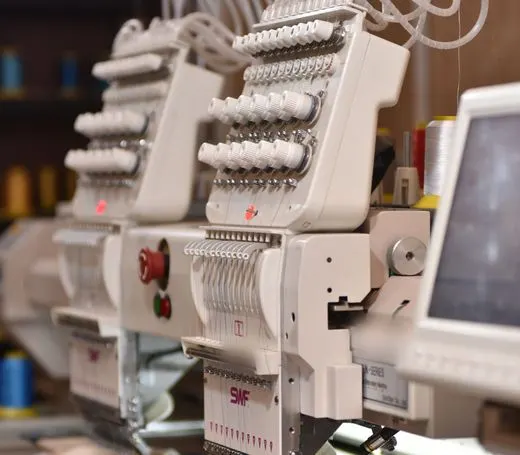
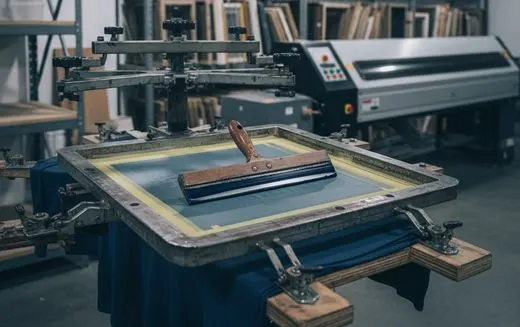
Run embroidery, screen print, and DTG under one roof and you're running three production processes, three lead times, and three cost structures. Most systems treat them all the same.
Sector · garment decoration
Garment decoration business systems were never built for how you actually work.
Embroidery, screen print, DTF, and DTG each work in their own way. But the ERP and MIS systems sold to decoration businesses rarely account for that. Embroidery is not the same as screen print. Your systems should match how you actually work.
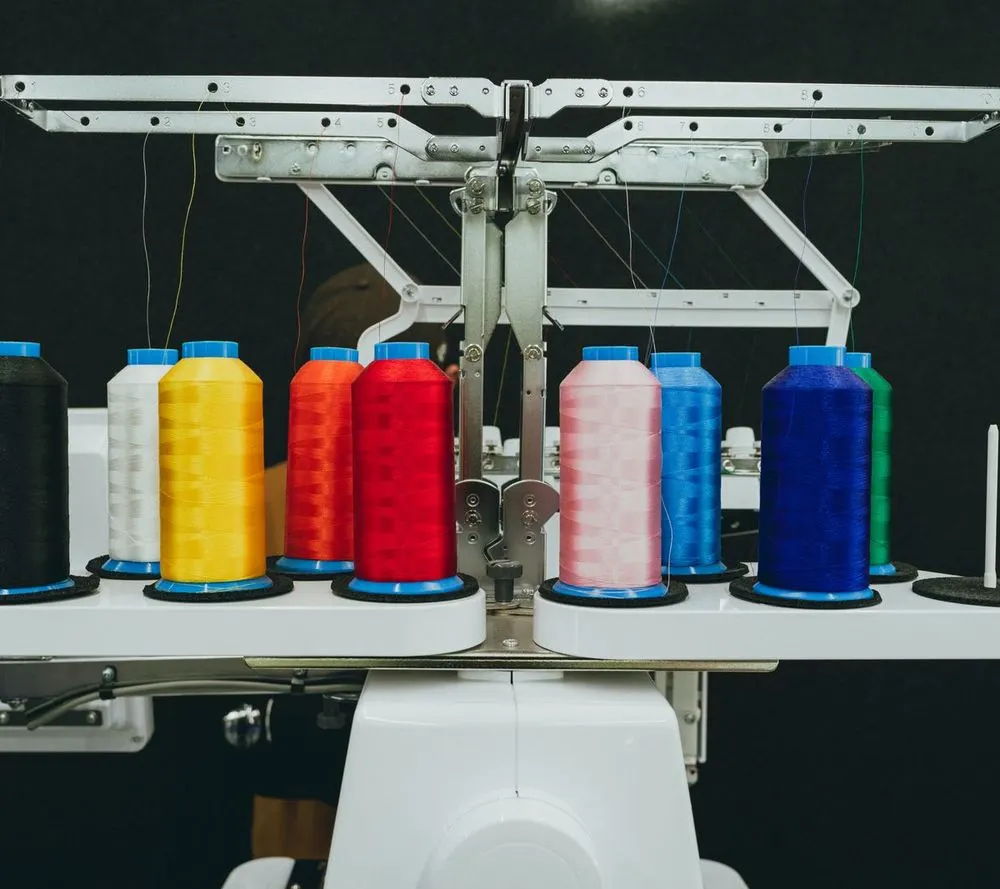
Three methods, three production logics.
decodedops.co.uk · DO-ART-923 · Rev 01One order's route
In, artwork, blanks, three methods, out.
01 · In
Order intake
Online, trade and repeat orders in one place.
02 · Artwork
The artwork loop
Proof and sign-off travel with the order, not in email.
03 · Blanks
Blanks in
Checked against committed orders.
04 · Out
Despatch
Each method on its own clock, out on the date promised.
Common challenges01 · Decoration method mix 02 · The artwork loop 03 · Blank dependency 04 · eCommerce disconnected from production 05 · Embroidery production workflow versus other methods
Where the problems tend to live
In garment decoration, the same operational problems appear in different shapes across different businesses. These are the ones that cost the most.
Artwork sign-off causes more delay than almost anything else in this sector. Every manual chase and email thread is time and money that shows up nowhere. Artwork software can automate sign-off, but only if it connects to your order system. Most businesses still approve artwork by email.
Your production schedule is hostage to blank availability. Most businesses have no real visibility of incoming stock against committed orders, until the problem is already in the queue.
Online orders that don't automatically flow into the production schedule. Personalisation that needs manual re-entry. Artwork files that arrive separately from the order. All of this is solvable.
Embroidery scheduling is not the same as screen print or DTF. Machine capacity, stitch count, digitising time, and thread changes all affect the schedule in ways generic software ignores. A system that can't represent embroidery accurately just means manual workarounds.
How I help
What the work actually looks like
A structured audit followed by specific, costed recommendations. No vague frameworks, no generic advice.
01
Map your whole workflow, from order intake to despatch
02
Find where the artwork loop is causing delay and cost
03
Assess artwork software and how it connects to your order system
04
Review how you source blanks and where that leaves you exposed
05
Check for gaps between your online shop, order system, and production
06
Write an independent vendor brief if new software is needed
07
Put a number on every finding in time, headcount, and money
The work in this sector
Garment decoration ERP and systems
ERP, eCommerce integration, artwork management, and production workflow, built around how decorators actually work, not how generic ERPs assume you work.
See how it worksMost common in garment decoration
The problems I see most often
Related
Operations consultant for print & embroidery
If you run embroidery alongside screen print or DTF, the same operational challenges apply, but with the added complexity of decoration-method-specific scheduling. See the full picture for print & embroidery businesses.
Case study
ERP and supplier data integration for a decoration business
Project-leading an ERP change alongside a custom Works build for supplier data, Amazon FBA, and channel automation.
Book a free discovery call.
The audit starts with a free 60-minute call. No obligation. Just a conversation about what's happening in your business.